
Our StoriesCommunity Gardens Make Healing in LA Possible
A Conversation with Karissa and Luis at the Fremont Wellness Center and Community Garden.
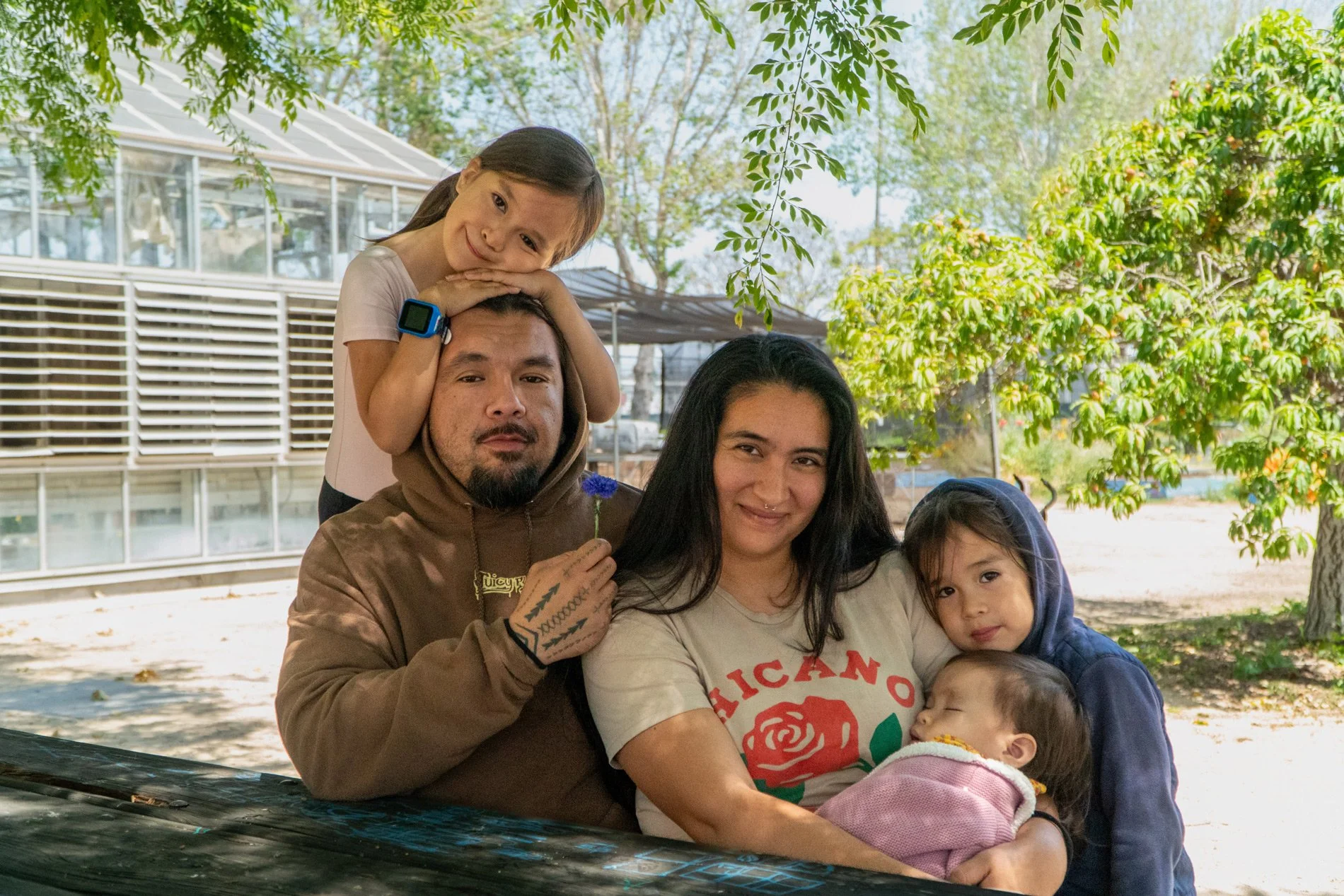
Can you please tell us about yourselves?
LuisI'm a community member. I'm a restorative justice facilitator and self-defense instructor, whatever the community needs me to be. My connection with the LA Neighborhood Land Trust came about because I was the Coalition Manager for a nonprofit in the area, and the LA Neighborhood Land Trust was a member of that coalition. I saw there was alignment on a lot of different levels, and naturally, it all melded together. I've done self-defense sessions and educational workshops at the garden sites as well. It's been a beautiful relationship and not a transactional one, but one of reciprocity.
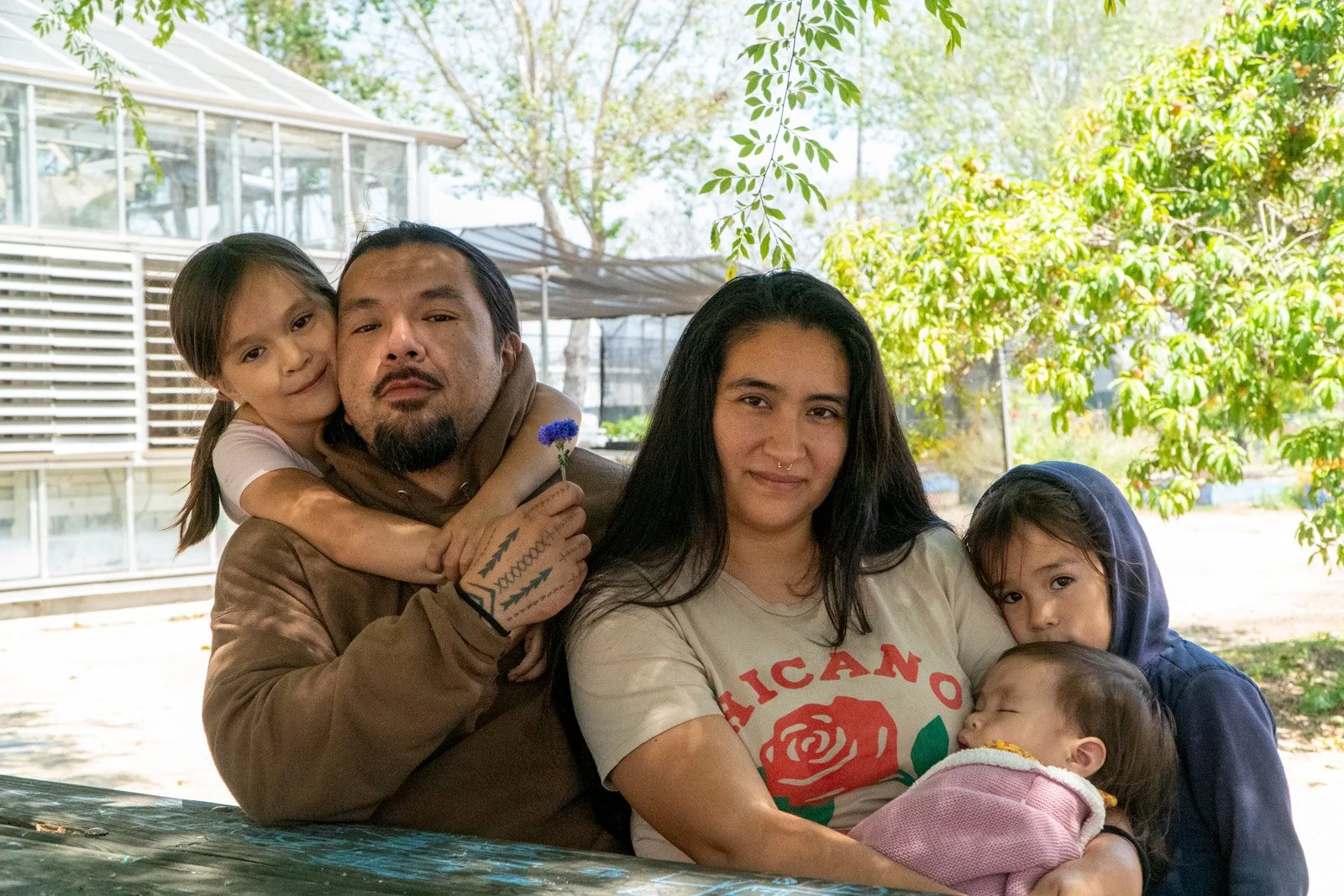
KarissaI am actually from Denver, Colorado. We moved to L.A. about five or six years ago, and to this neighborhood specifically three years ago. It was Halloween time, and we were taking a walk around. I peeked in and saw that a lot of the plots were not taken care of. I saw a phone number that I could call, and ever since then, we've been part of this garden.
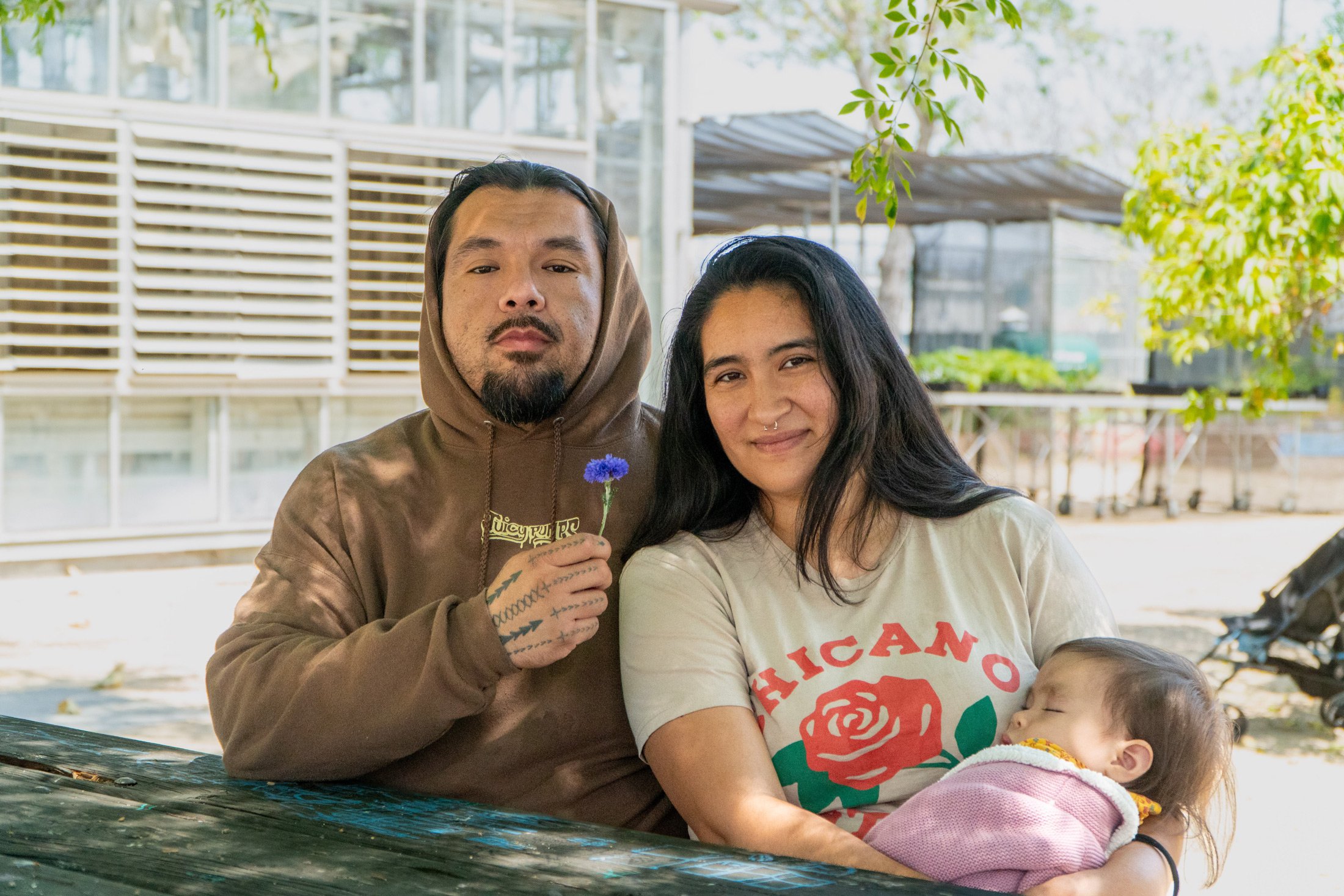
Luis (left) and Karissa (right)
Can you please tell us about where we are today?
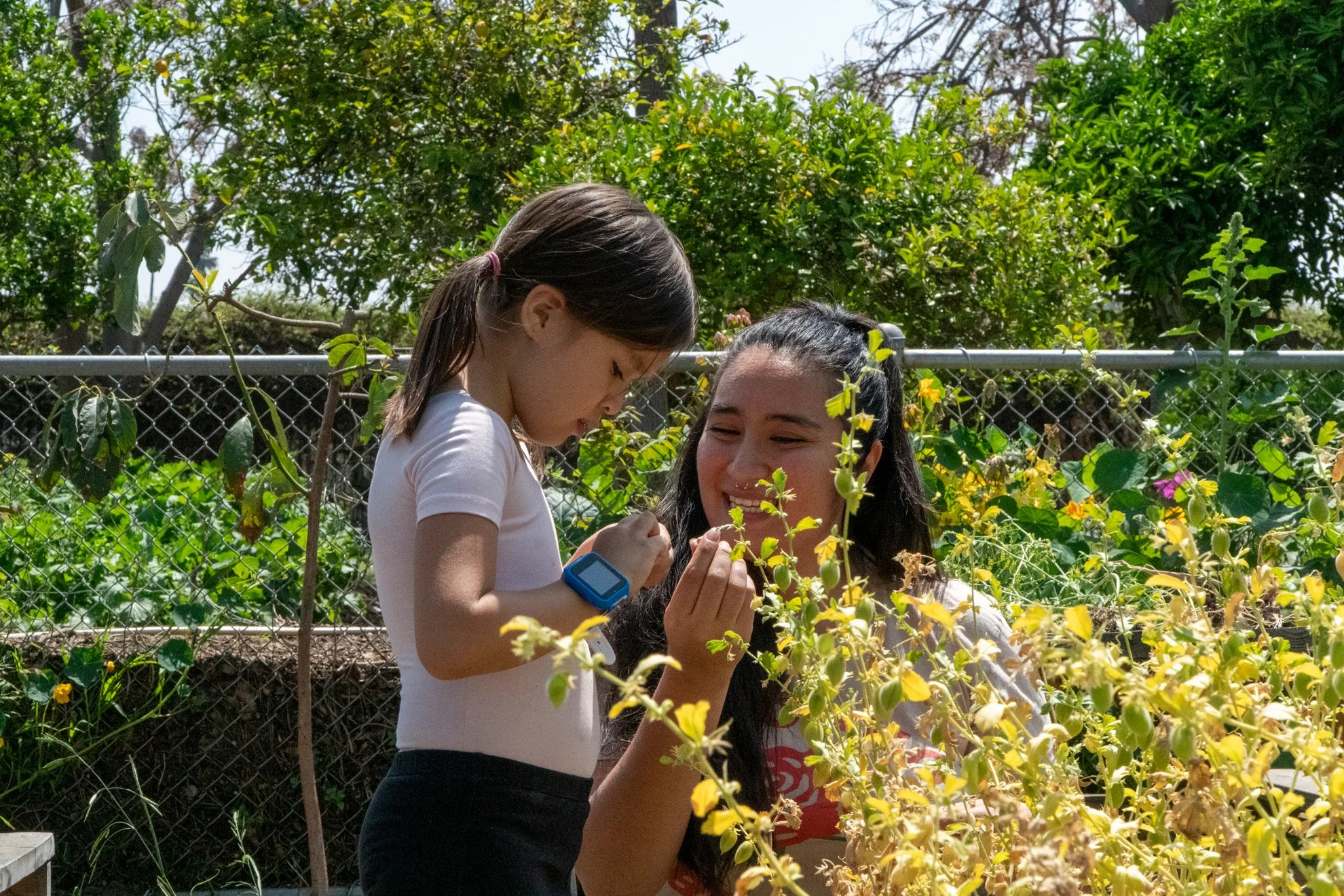
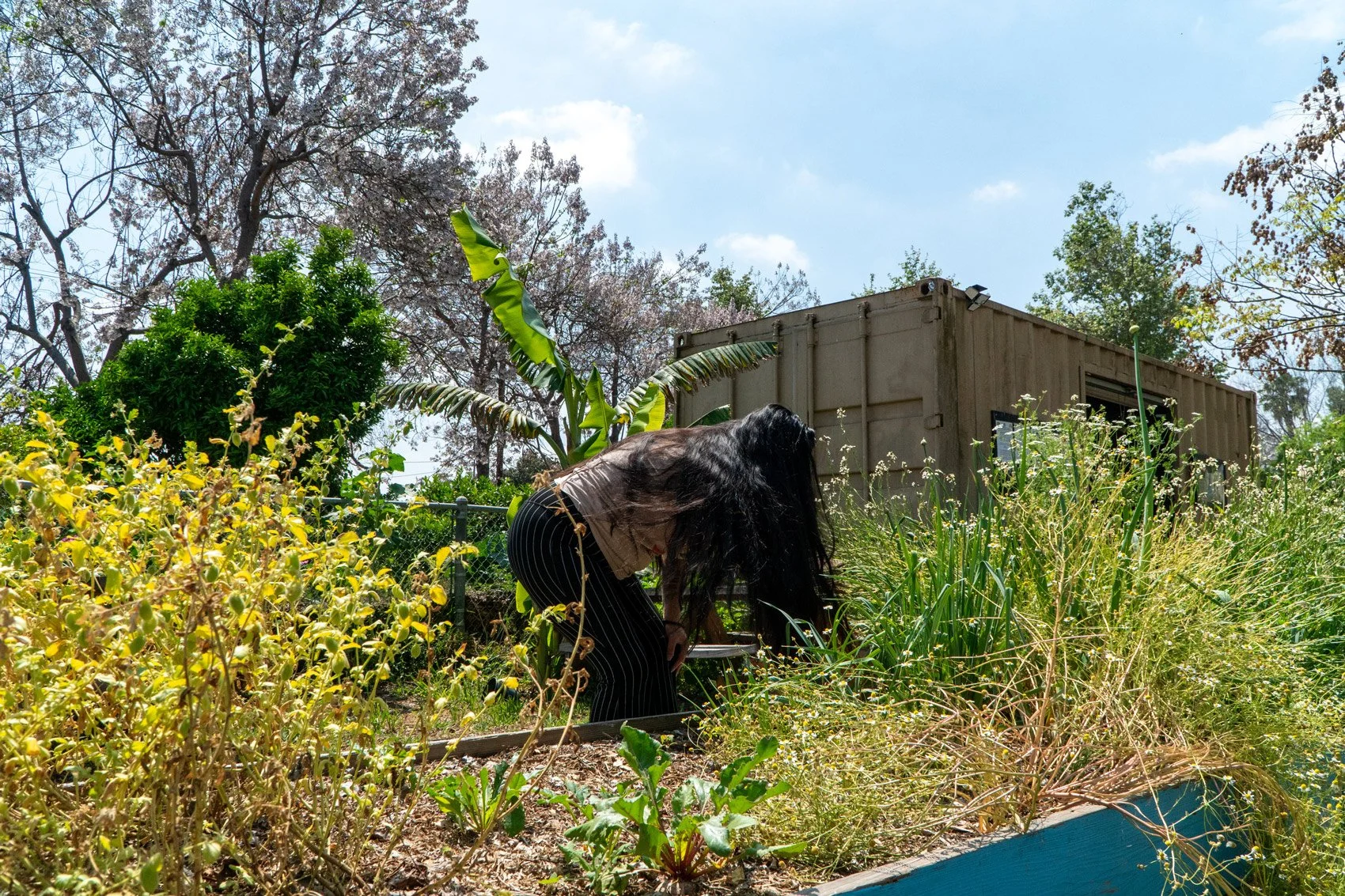
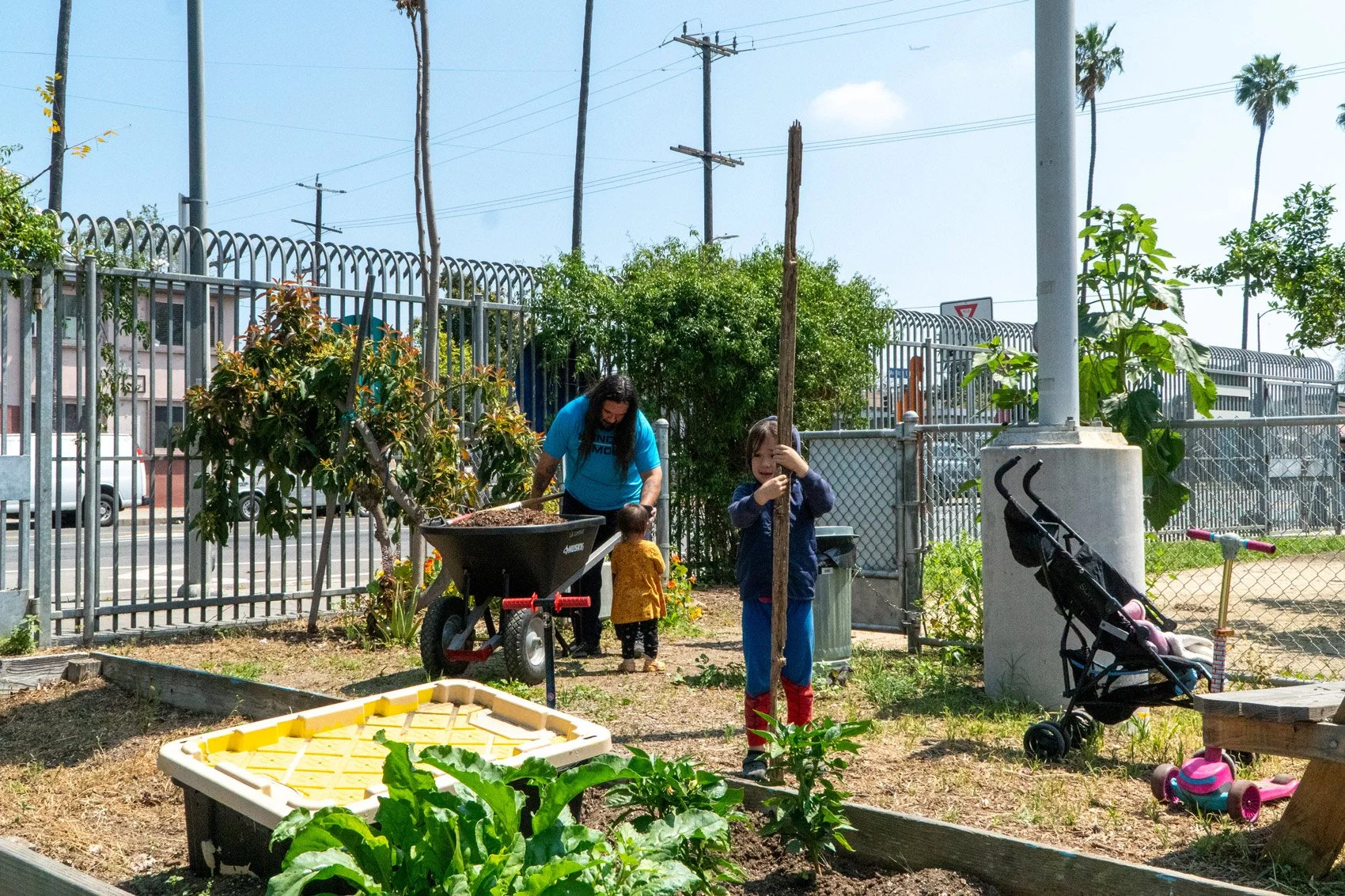
KarissaWe're here at the Fremont Community Garden and the orchard. This is part of a larger space from the LA Neighborhood Land Trust. We share this space with a clinic, and then the students from Fremont High School have their own gardening space here. And then we have our own private community space. This is a space where people gather, have events, come together not only for gardening, but also for community building. It's really beautiful because we live only a few blocks away, so we walk here and we get to know our neighbors.
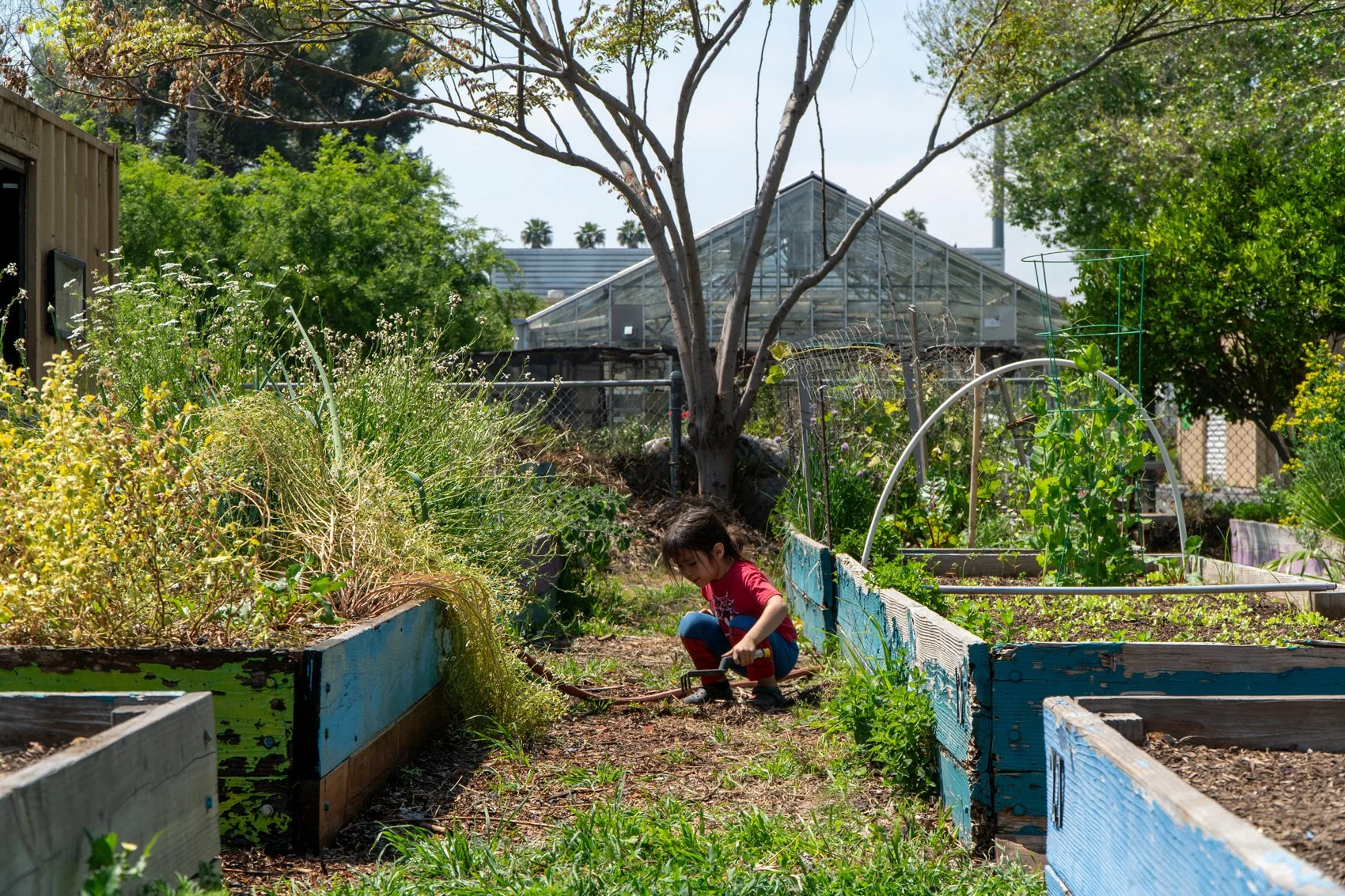
LuisWe find ourselves in South Central Los Angeles, close to the Florence-Firestone district. This is connected to Fremont High School, which is a historic high school here in Los Angeles. They've carved out, over the years, a beautiful garden space where students and the community can share in healthy access to clean oxygen and good food. It's a space to come and meditate in a place that's very chaotic at times, and often doesn't really have places to retreat.
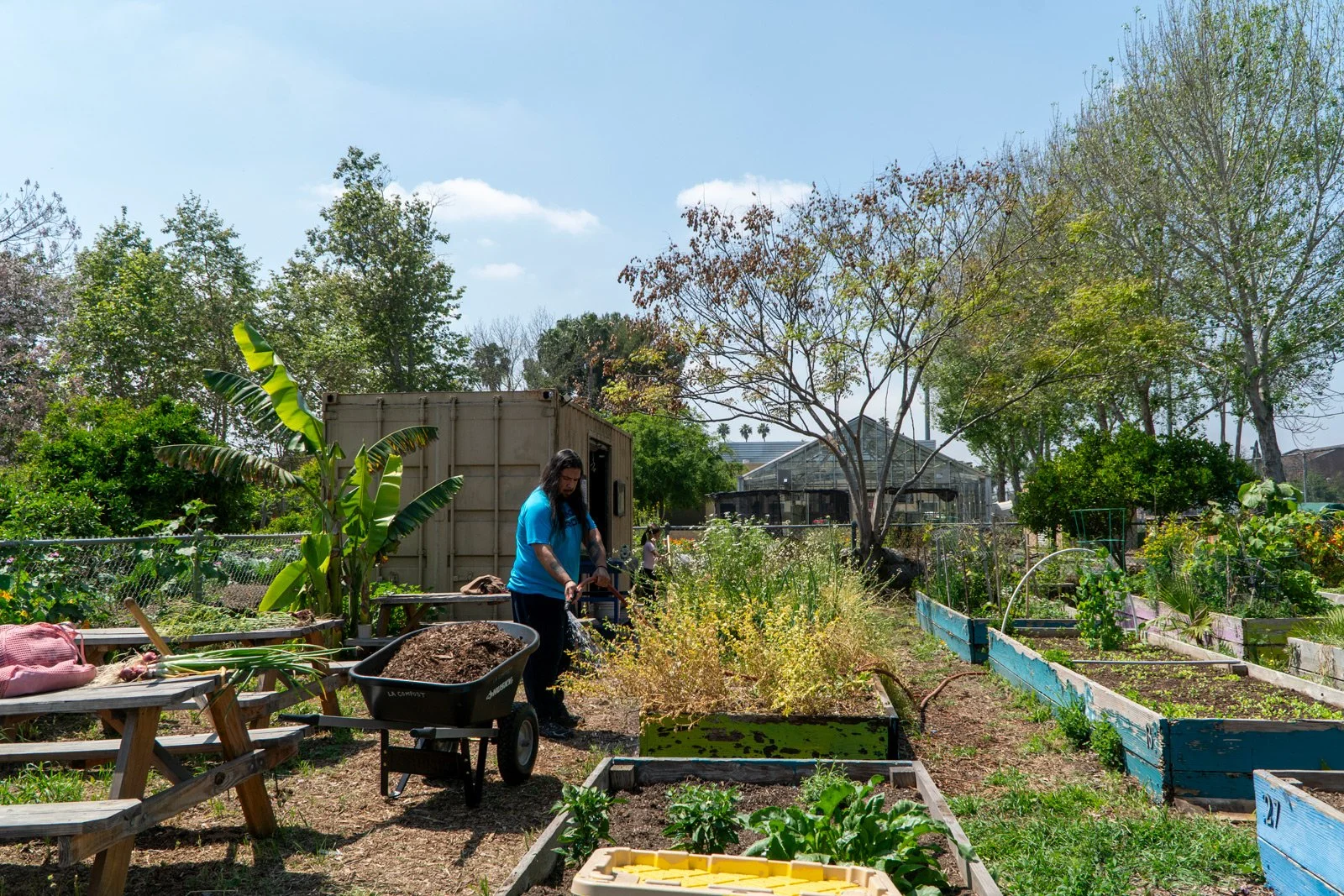
“The garden space is a way to remedy the generational disinvestment that exists in these communities. That is, to get people closer to their natural ways of being.”
Luis
Fremont Community Garden Member
What are the different ways that your family uses the garden space?
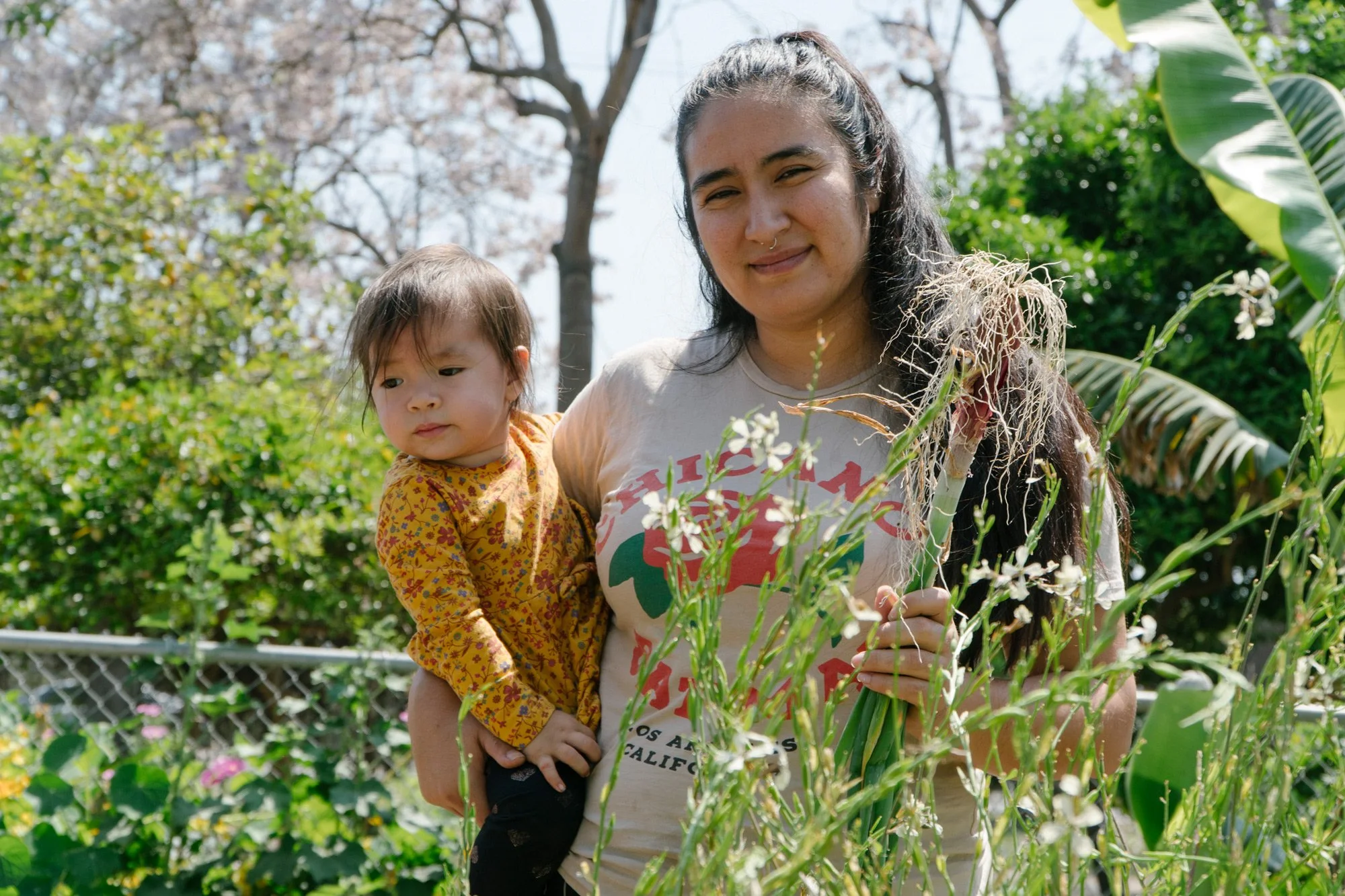
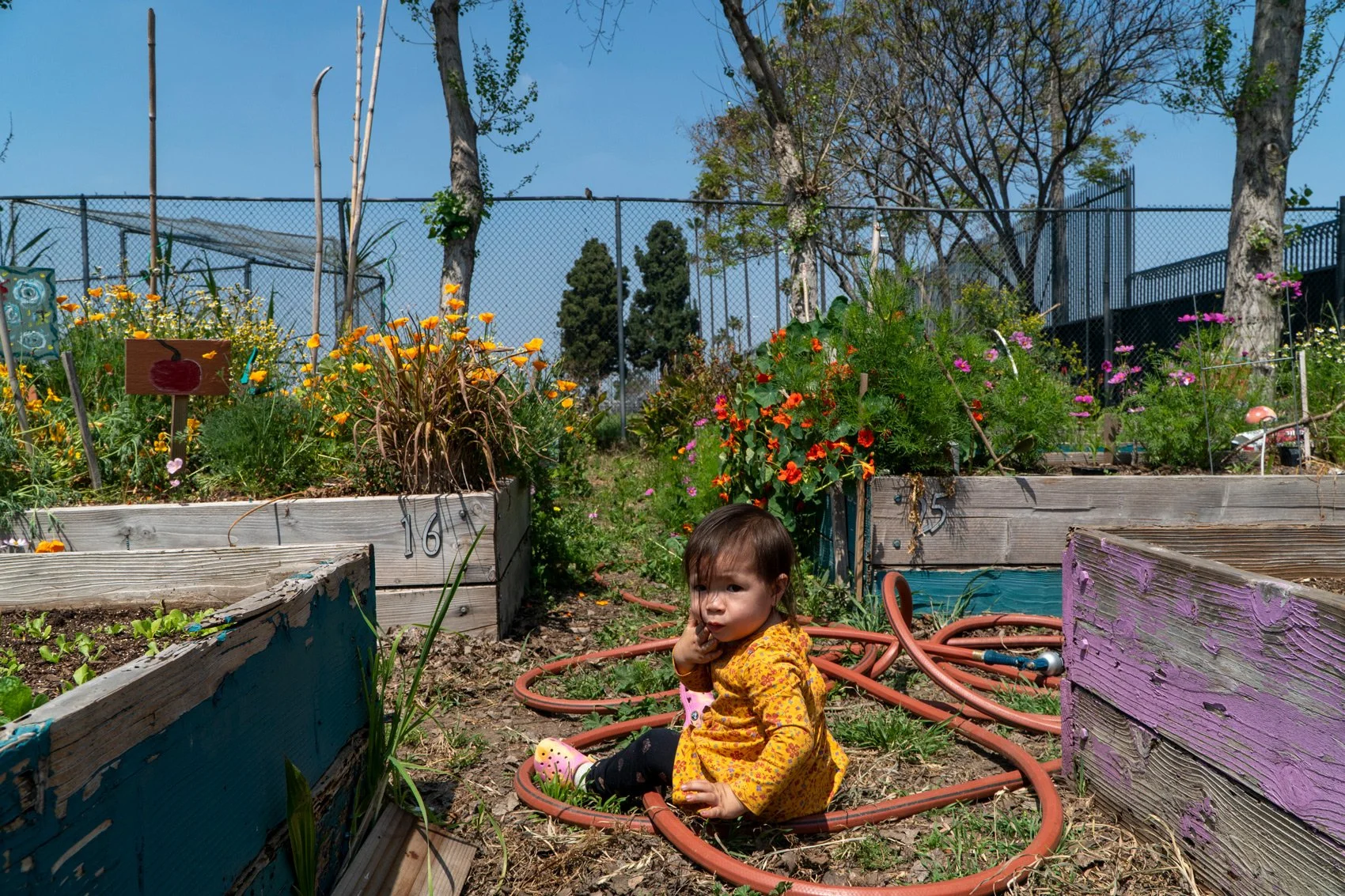
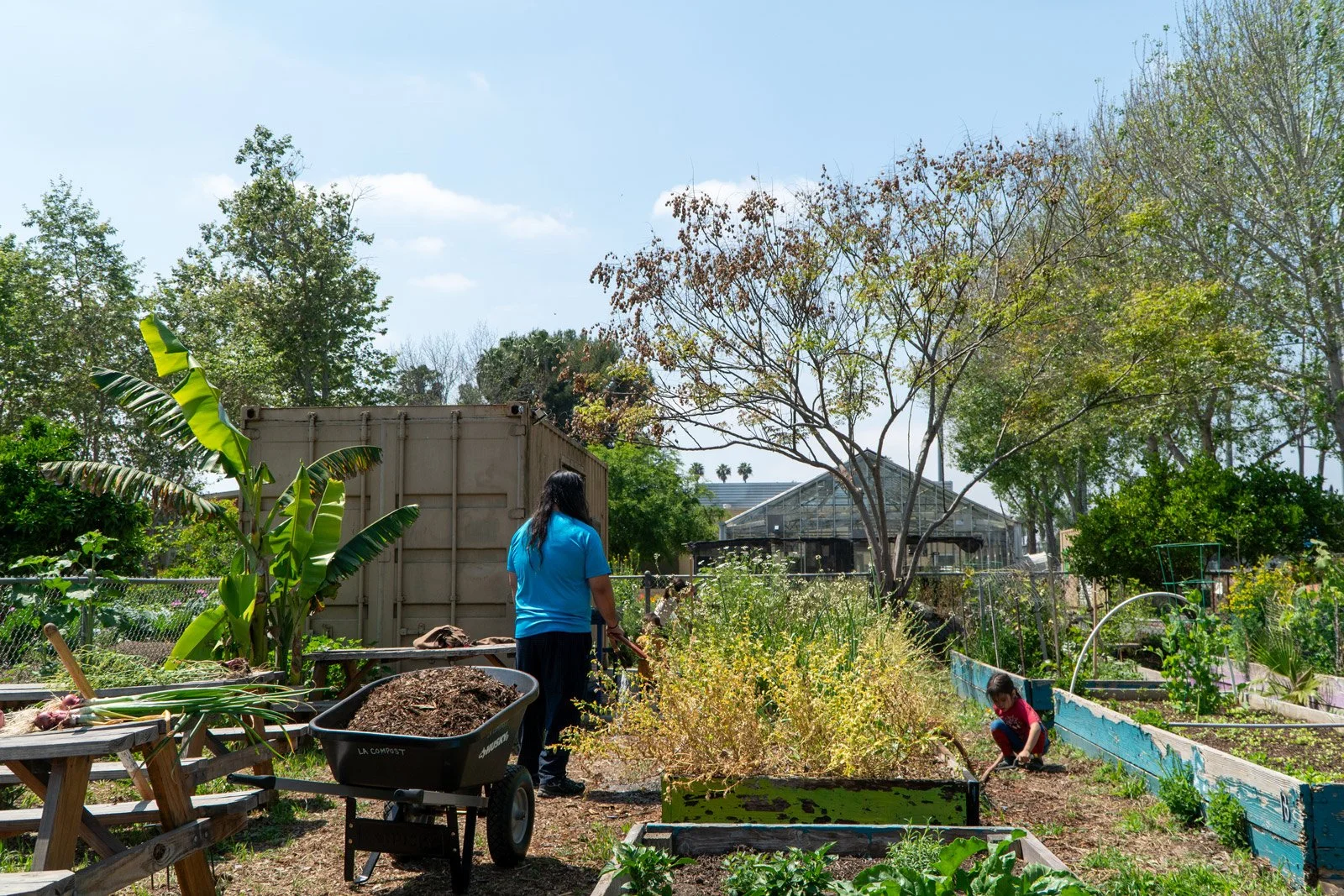
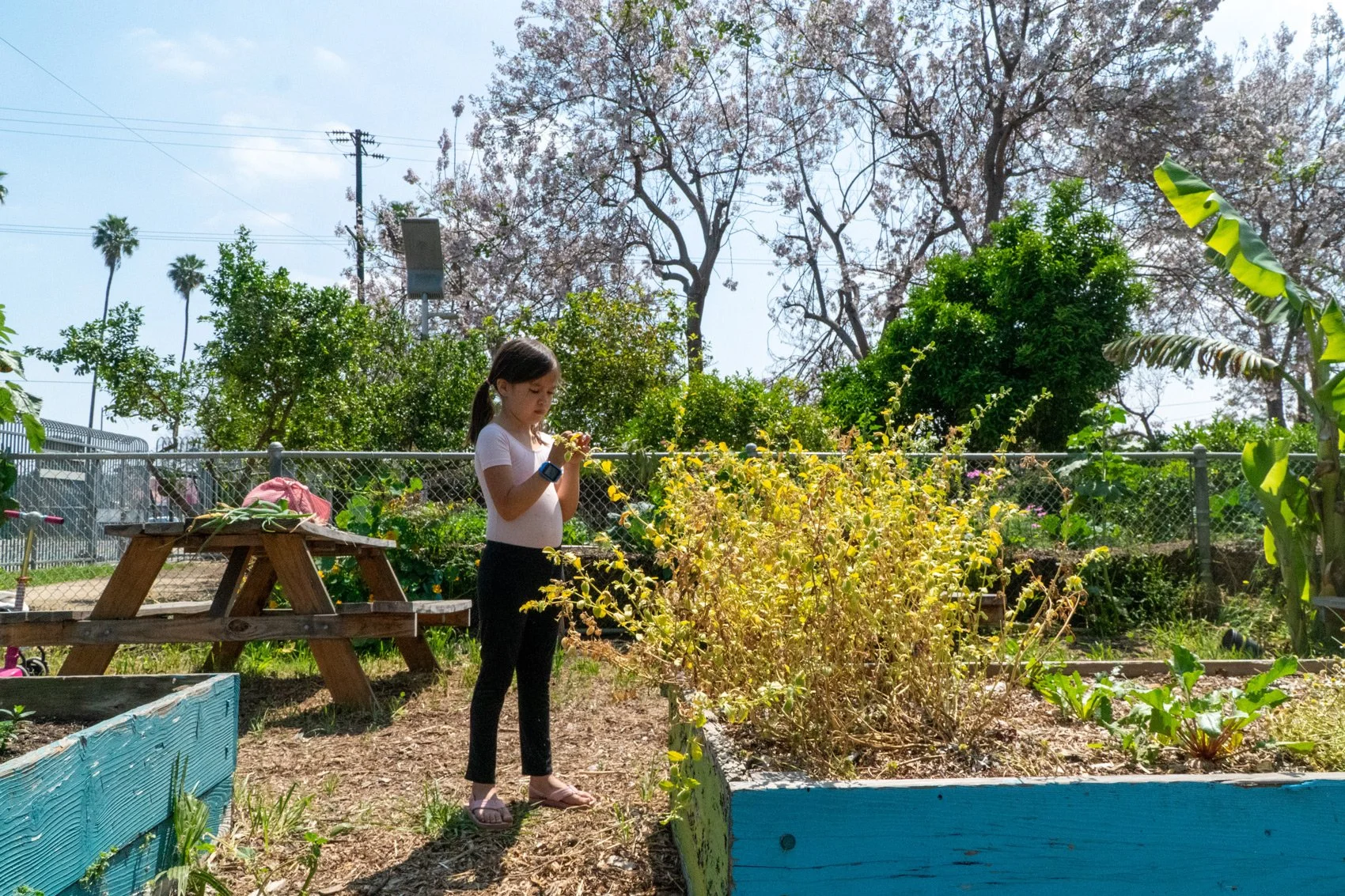
KarissaBuilding the connection between where our food comes from and how we raise our children is really important to us. We homeschool our kids, so this space serves as a learning ground for our children and for us, too, because we've grown a lot in our gardening journey. They can see where their greens and their corn come from and help me put in the seedlings in the ground. They'll help me water and clean up, too. They'll help for about 10 minutes, and then they'll just run around. I've heard from other families that the main thing they come here for is to be outside in a place that's safe. It's fenced off. It's kind of like an oasis. It's a place where they can run free. Even though there's no playground, there are plenty of trees for them to climb on. That's really what we use this space for.
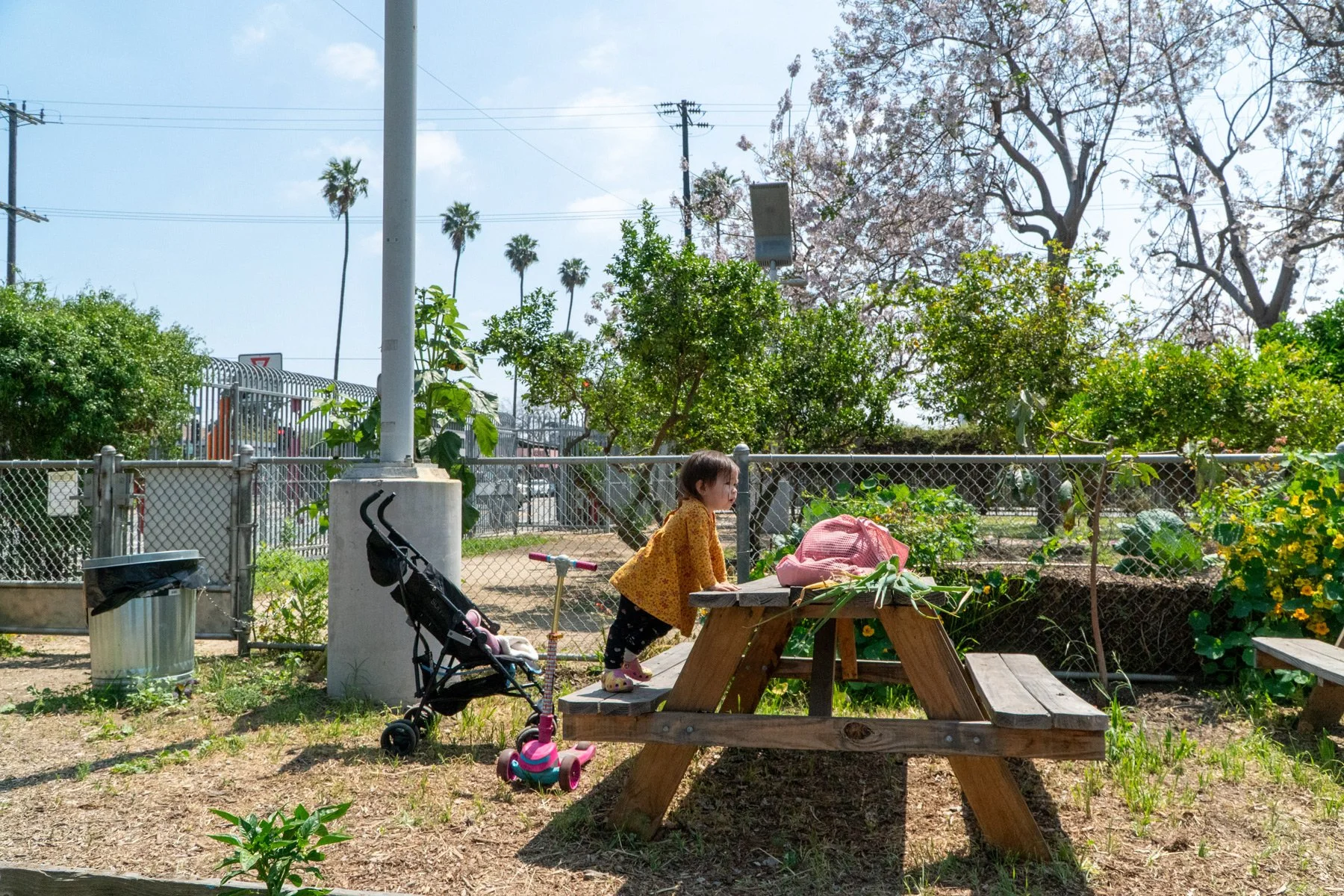
LuisMy grandmother had a garden in the backyard of our old home when we were kids. For me, it was a way to reconnect to the original way of being, which is us having our hands in the dirt. That leads you to ask more questions. What are the benefits of having your hands in the dirt? Why do kids have such a predisposition to get dirty? And then you learn that it's healthy for the kids to get dirty. I love seeing my kids get dirty because that just means that they're getting healthy.
What are the benefits of a community garden?
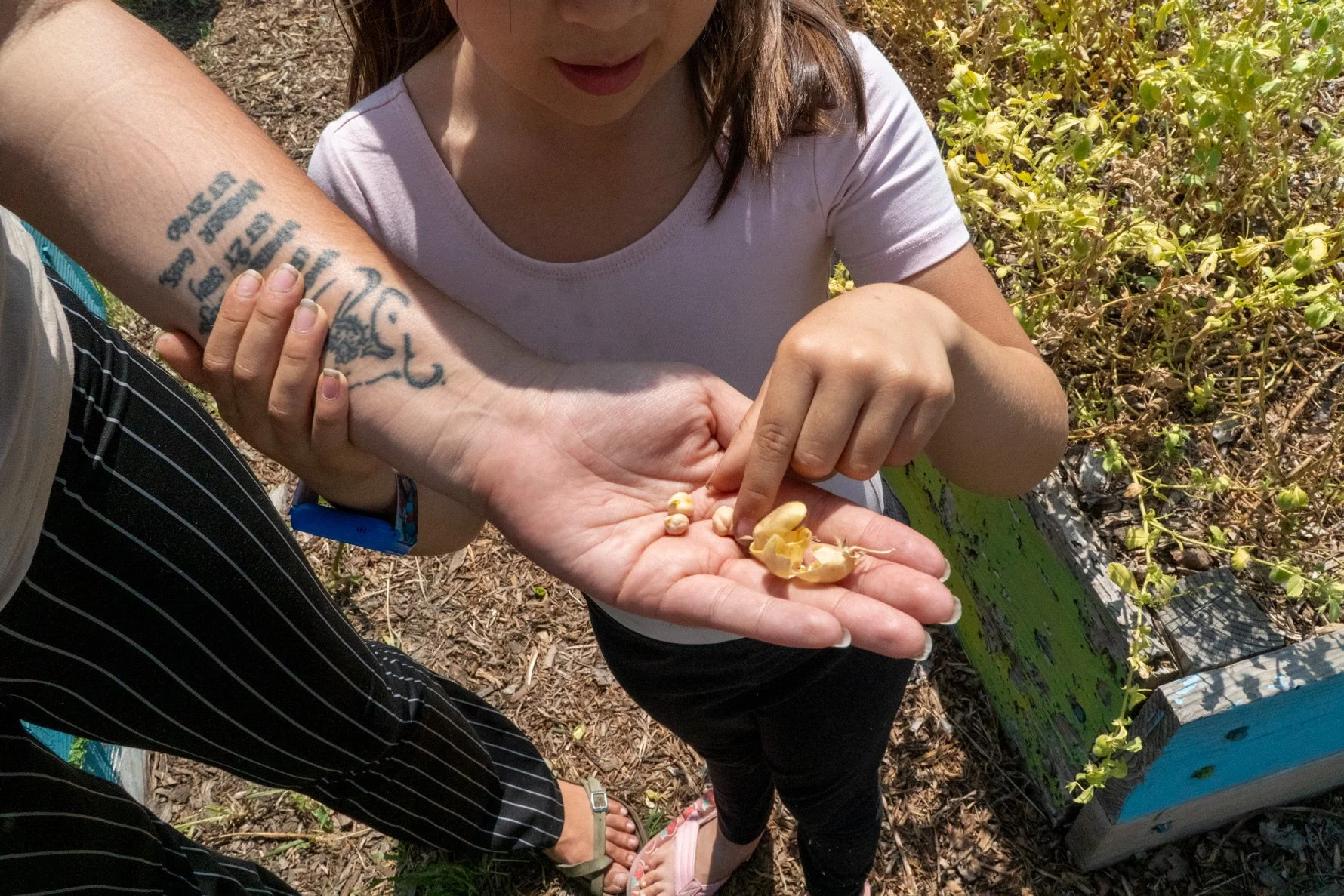
LuisIt gives you a space to go into nature. You don't have to drive hours to get here. Even though there's a lot of community noise, you still hear the birds, right? You still hear the wind. You can hear little movements, and it brings a sense of tranquility. I think in a place that, for generations, has been affected by constant tension and disarray, for us to be able to carve that space out here is huge. We're surrounded by pollution. We can go to a place where all we have to do is just sit down and breathe in some clean air.
KarissaThe other day, we were doing cleanup, and we found a monarch butterfly with a broken wing. Imani, my daughter, grabbed her, and she was holding her for a while. We took her home. We took care of her and gave her some DIY nectar and some flowers. She stayed at our house for like three days, and then we released her once it looked like she could fly a little bit better. That wouldn't have happened if we weren't part of this garden. That emotional connection to other sentient beings extends in our family to the trees and to the flowers and to the bugs that are in the ground.
What is your growing process like?
KarissaWe've really tried to grow with the seasons and be useful in what we're growing. We want to make sure that everything we grow, we use, and whatever we don't use, we either trade or give away, so that our kids see that it's not something that goes to waste.
We grew garbanzo beans for the first time. We've grown watermelon and squash. We had broccoli, onions, leafy greens, and herbs. I make my own skincare products sporadically, so there are a couple of flowers and herbs that I've grown and put into my oils and body butters. We got some Blue Hopi corn from a friend of ours, so we grew that for the first time. That was really cool.
“People who live in big cities are so disconnected from nature, and there's this idea that we somehow aren't part of nature. When we build that bridge again, we recognize that we are part of this ecosystem with the birds, the mycelium in the ground, and the trees. We understand that we are part of this bigger web of life.”
Karissa
Fremont Community Garden Member
Why do you think it's important that green spaces are integrated into more parts of Los Angeles?
LuisI think it gets us one step closer to reclaiming our humanity. It's very easy to disconnect populations from each other if they don't have spaces to convene. If you look at the civilizations of old, they've always had epicenters where people gather and share stories or goods. If you look around at the way our neighborhoods are set up, they're pretty much cut in different ways, whether it's freeways cutting neighborhoods in half or there being little to no green space. I think these are a vital part of us getting back to our original way of being.
KarissaI think that collectively as a society, we understand that decisions made by people before us have impacted the environment in a negative way. So this is our collective responsibility, to create spaces like this. It's not only on the LA Neighborhood Land Trust. There have got to be people to use this space and to take care of the space consistently. People to get to know the variety of trees, the species of birds that lay their nests here, and the different species of pollinators and flowers that are all very essential to the ecosystem of L.A. This is our duty and responsibility to continue efforts like this. It benefits the animals around us and the insects and the whole web of life.
What is your hope for the future of community gardens in Los Angeles?
KarissaThe LA Neighborhood Land Trust has been able to incorporate a lot of ways to handle conflict and people relationships with restorative practices. The reality is that when you bring a lot of different people together, especially in a neighborhood where a lot of harm has happened, if you're not intentional about guidelines and values and practicing open communication, then the projects just fall apart. I think the key is building relationships with the community that the projects are trying to serve, which takes time but is worth it. I'm really thankful to Diana Campos-Jimenez, the Garden Manager, for her leadership and her openness to letting us run the garden the way that we want to run it.
LuisWhen it comes to community gardens, I believe that the natural progression should be projects that look to establish different communities as food sovereign areas. Food sovereignty is revolution in practice. All we're doing here is reminding people that they have always had the power to make change. It just takes investment, patience, and a little bit of water. If it can happen for a couple of us here, imagine if you started to multiply that. It doesn't have to be this huge acreage. It just has to be something that's made with intention. There are plenty of initiatives that show you don't need big tracts of land to feed people. There should be neighborhood grocery production, because that's truly what the community deserves.
Get InvolvedHelp grow a community-powered movement.
-
Community Gardens
Join, volunteer or grow your gardening skills at one of our community-stewarded gardens.
-
Memberships
Your membership brings parks, trees, and joy to communities long denied them.
-
Support Our Mission
Make a direct contribution from planned giving to stocks and asset donations.
-

Start a Conversation
Questions about building a park? Looking for accessible green space? We’d love to hear from you.