What Is a Living Schoolyard?
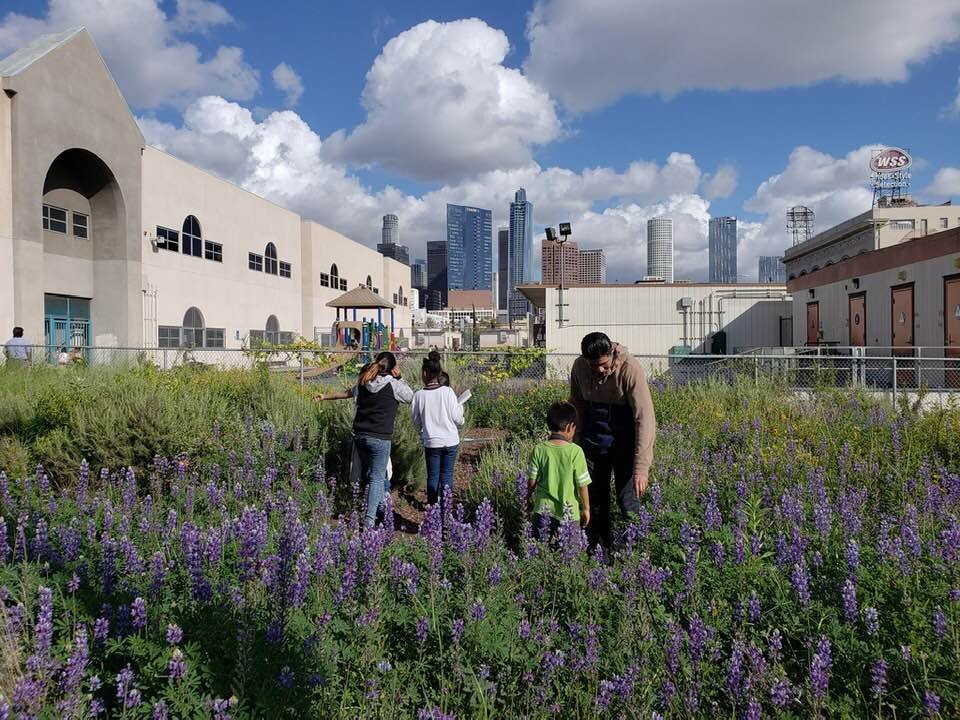
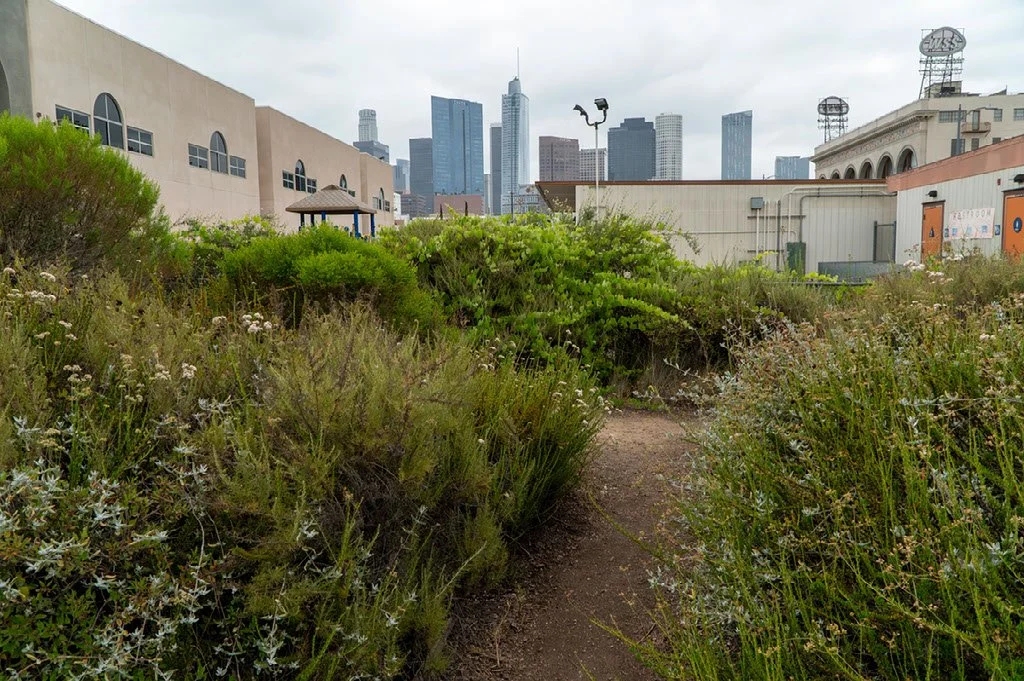
A living schoolyard is a richly layered outdoor environment that strengthens local ecological systems while also providing place-based, hands-on learning opportunities for students of all ages. Living schoolyards are especially beneficial in communities like South Los Angeles where there is very little green space. Having access to nature and natural materials, as well as biodiversity, leads to healthier child development and better academic performance. Living schoolyards also benefit their communities by reversing the urban heat island effect in which structures like roads and buildings absorb and remit the sun’s heat.
Read the full article about the need for green and living schoolyards here.
How do you transform an asphalt and concrete school into a living schoolyard?
We green a campus by replacing asphalt and pavement with California native plants, garden beds, shade trees, stormwater capture features and natural play and learning spaces. When we are able, we open them to the community after school hours.
How are living schoolyards making an impact in LAUSD?
Recently, California earmarked $150 million to greening schoolyards across the state. “Our big, green audacious goal is to plant enough trees by 2035 so that when mature, they’ll provide 30% shade cover to child-accessible areas,” says Walter Passmore, a State Urban Forester with CAL FIRE. The Los Angeles Neighborhood Land Trust was awarded a grant from these funds to support five school-greening projects.
In addition, LANLT co-founded the Living Schoolyards Coalition (LSYC) in 2019, a coalition of nonprofit organizations, educators and community members who have come together to create and advocate for equitable and healthy school environments that support physical and mental health, social and emotional wellbeing, safe outdoor education, access to nature and climate resilience for all of LA County’s public-school students and communities. The LSYC is advocating for a minimum of 30% greening for all schoolyards within LAUSD district. In addition, LSYC continues to advocate for opening schoolyards to communities after school hours.