
LA Park History Series: Los Angeles Activism - What Role Have Our Parks Played?
Series written by Kate Martin Rowe
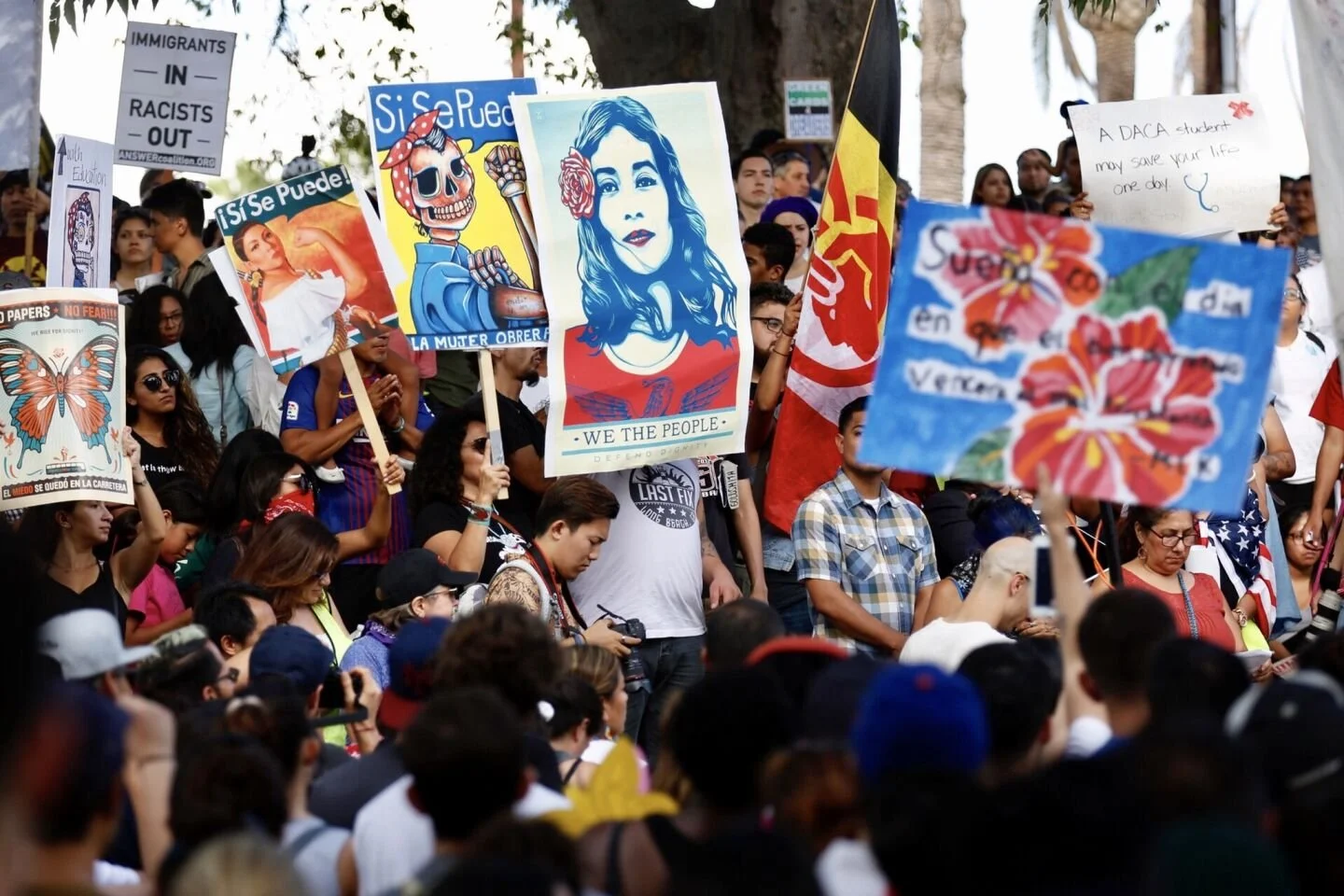
We know that when our collective temperature rises and situations demand justice, we take to the streets. But how often have we acknowledged that protest doesn’t just happen on the streets? Public parks have long held a central role in movements for social change in the US. Parks offer space for people to come together, to talk and to listen, to voice dissent and to congregate. Indeed, LA’s public parks have long provided the necessary breathing room for demonstrations, rallies, and free speech of all kinds. Many of LA’s parks—both large and small—have been the site of historic uprisings and calls to action, as well as the police brutality that has all too often met demands for justice.
Here's a look back at some of our most iconic social justice movements and the role LA parks have played.
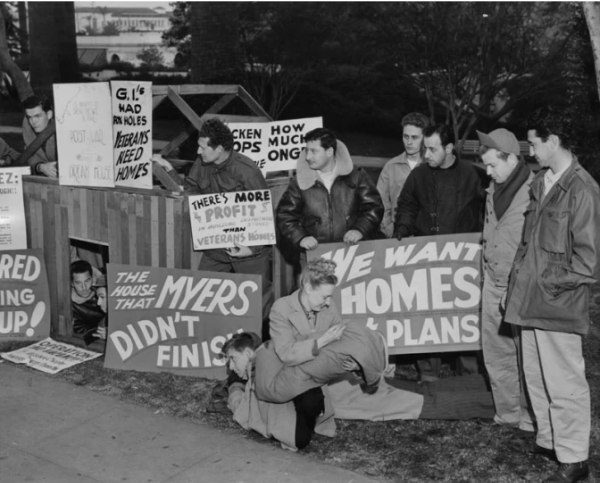
GI Protest at MacArthur Park in 1947. Photo courtesy of KCET.
MacArthur Park
The iconic park in Westlake has long been a gathering spot for protesters, agitators and movements of all kinds. In the 1940s, returning GIs went to the park to protest a lack of promised housing. In the 1950s, FBI informants claimed that communist supporters had conducted illegal fund-raising activities at rallies in the park. In the 1960s, the park hosted anti-war protests and anti-nuclear weapons rallies, and in the 1970s, rallies for Cesar Chavez and the farm workers’ movement, as well as for the Equal Rights Amendment and Vietnam protests. In 1980, members of the Revolutionary Communist Party showed up in MacArthur Park to pay tribute to party member Damien Garcia. Through that decade, the park also hosted protests against President Reagan’s cuts to social programs and US involvement in El Salvador. More recently, on May 1, 2006, 400,000 Angelenos marched peacefully to MacArthur Park from City Hall for a rally on immigrant rights as part of a national protest and work stoppage they memorialized as the “Day Without Immigrants.”
Hazard Park
March 1, 1968. Thousands of Chicanx students all over East LA walked out of classrooms in what collectively became known as the “East LA Blowouts.” Many of the students were inspired by Lincoln High School teacher Sal Castro who had long agitated against inequity and racism in LA’s schools. That day students from Lincoln High walked to Hazard Park in East LA where LAUSD had offices. The walkouts continued over a period of a couple of weeks and on March 8th, protesters held a rally at Hazard Park that attracted 700 students. In the summer of 2021, the Latino Heritage Scholars recommended Hazard Park for federal protection, having served generations of residents in East LA and as the site of seminal Chicanx history.
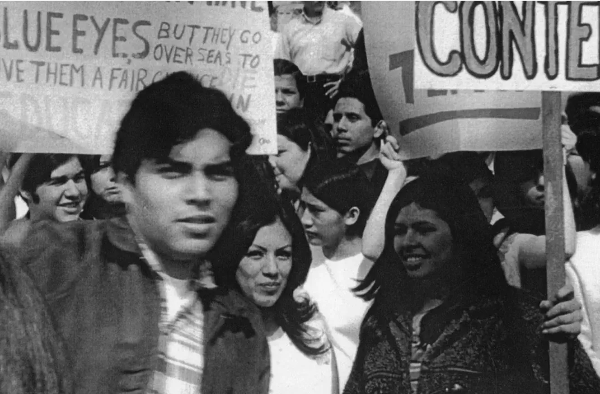
East LA Walk Outs in 1968.
Edward A. Obregon Park
March 10, 1968. Also central to the East LA Blowouts was Edward A. Obregon Park where a rally attracted about 500 students, teachers and activists.
Ruben Salazar Park
August 29, 1970. Nearly 30,000 Mexican Americans marched through the streets of East LA to protest the high number of Chicanx draftees who were dying in the Vietnam war. The march was called the National Chicano Moratorium and ended at what was then Laguna Park. When a local shop owner called in the sheriff’s department over some incidents of petty theft, the peaceful rally turned deadly. Hundreds were injured and three activists died, including noted LA Times journalist Ruben Salazar who had long been seen as the voice of the Chicanx community. The park was renamed Ruben Salazar Park and dedicated in his honor just a few weeks later on September 17.
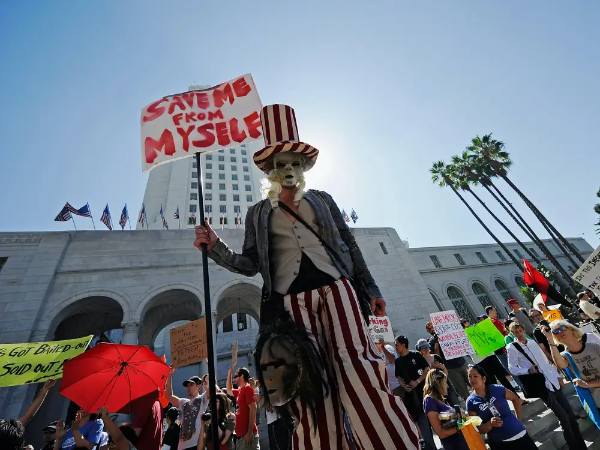
Occupy LA 2011 at Grand Park. Photo courtesy of Business Insider.
Grand Park
October 2011. Beginning on October 2, 2011, protesters with Occupy LA moved into Grand Park across from City Hall, setting up a tent city that eventually grew to encompass more than 200 tents and 400 campers, becoming the second largest Occupy protest in the country. Two months later, the camp was cleared out by then Mayor Antonio Villaraigosa with about 300 protesters arrested.
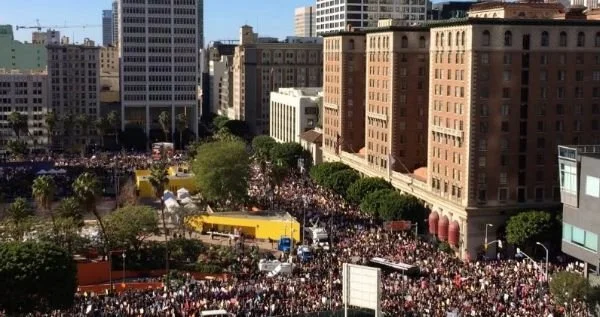
Women's March of 2017 at MacArthur Park. Photo courtesy of Welikela.com
Pershing Square
January 2017. Following President Trump’s election, thousands gathered for a rally in downtown LA’s Pershing Square and marched in support of women’s rights as part of the national Women's March.
Banning Park
April 2017. Several thousand protesters gathered at Banning Park in Wilmington as part of the national Peoples Climate March in protest of President Trump’s environmental policies. The Wilmington march targeted Tesoro Oil’s planned merger of its Wilmington and Carson plants.
Pan Pacific Park
2020. In the aftermath of George Floyd’s murder by police in 2020, rallies and protests went on for weeks in LA. Thousands gathered at Pan Pacific Park in the week following Floyd’s death to hear Black Lives Matter co-founder Patrisse Cullors speak and then marched through the streets to protest both Floyd’s murder and the hundreds of people killed by LAPD in recent years.
Father Serra Park
June 2020. Protesters gathered in Father Serra Park to tear down the statue of Father Junipero Serra, which had stood there since 1932. Serra, who had been canonized by the Catholic church in 2015, designed the mission system that terrorized, enslaved and aimed to erase California’s Indigenous peoples and culture for centuries.
Echo Park Lake
May 2021. Over 200 protesters gathered at Echo Park Lake to voice their dissent over the city’s removal of homeless encampments there that had established over the pandemic. The demonstrators were met with brutal force by LAPD and many, including journalists, sustained injuries.
Grand Park
May 2022. Thousands of Angelenos gathered to march in defense of abortion rights, beginning with a “Bans Off Our Bodies” rally in Grand Park.
Even the controversial LA icon Griffith J. Griffith recognized the importance of parks in the life of a city. Griffith had donated huge tracts of land to the City of LA for public parks and set up a trust fund that helped build both Griffith Observatory and the Greek Theatre in the late 19th and early 20th centuries, and in his self-published tome titled “Parks, Boulevards and Playgrounds,” he wrote: “Public parks are the safety valves of cities. They are the pleasure ground of the people. Nothing conduces more to the public health…”
To be sure, what is more essential to public health than protest? We at the Los Angeles Neighborhood Land Trust believe that Angelenos will continue to make good use of our communal green space to agitate and raise our voices, and it’s our mission to ensure that these spaces are protected and available for the people.