
LA Park History Series: Tovaangar & Griffith Park
Series written by Kate Martin Rowe
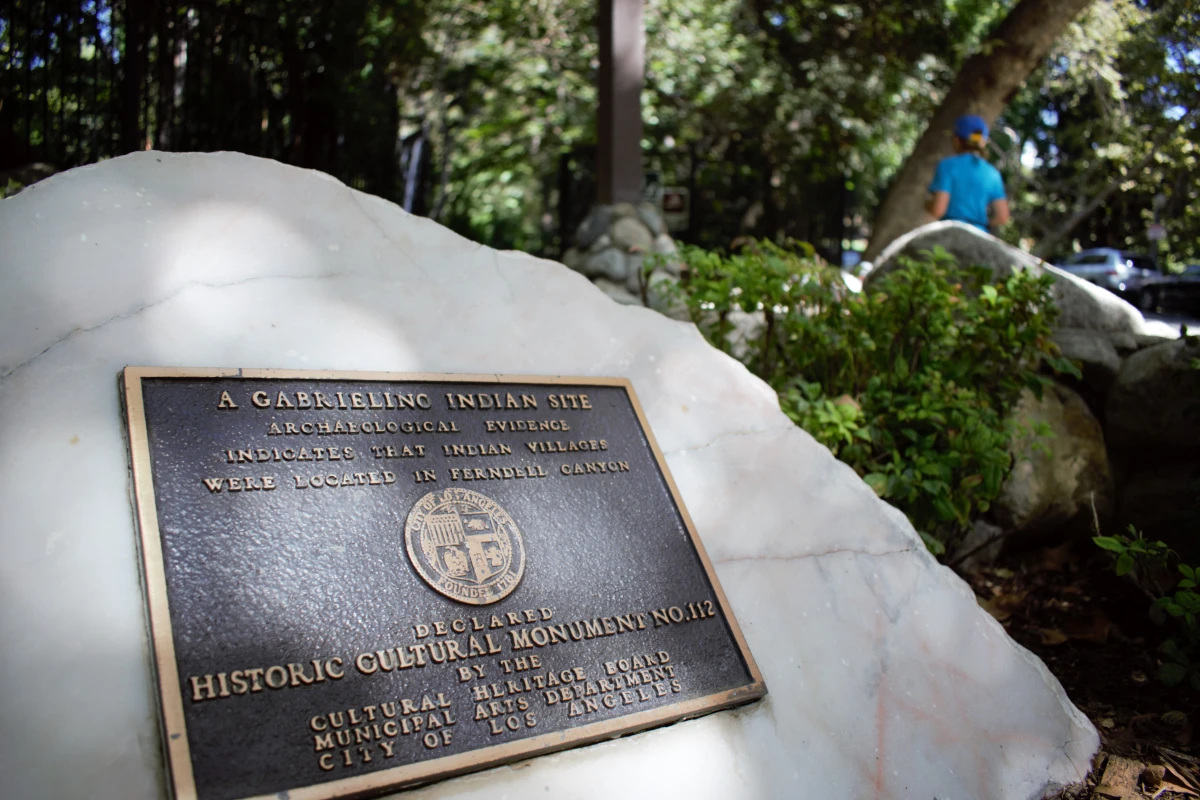
City of Los Angeles Historical Cultural Monument number 112 marks Ferndell Canyon in Griffith Park as a site once inhabited by Gabrieleño-Tongva people. Los Feliz Ledger, Photo: Carl Robinette
Long before concert-goers trekked to the Greek Theatre and tourists jammed the road to the observatory, and before picnickers sprawled out on lawns by their bouncy houses and festooned piñatas, the land we now call Griffith Park was home to the Tongva people. Historians now believe as many as two or three Tongva settlements were located in Griffith Park.
In this series, we have highlighted lesser known origins behind some of L.A.’s most iconic places and public lands, but for this post we acknowledge the very first displaced peoples of this land — Indigenous Californians.
For thousands of years before Europeans arrived, the Tongva and other tribes inhabited the oak-tree covered grasslands and hillsides of Southern California. They gathered and hunted for food, cultivated plants, traded goods, constructed housing and forged new customs that made for a flourishing culture and community. Tongva settlements and trade routes covered 4,000 square miles of land in Southern California with roughly 100 villages scattered throughout the area. Five thousand people called it home.
The land that was once known as Tovaangar stretched from what is now Palos Verdes to the San Fernando Valley and from San Bernadino to Saddleback Mountain. Many of the names in the Southern California basin echo the Tongva culture: Kuukamonga, Topaanga, Tohuunga, Kaweenga. The village of Povuu’nga was located just east of what’s now Cal State Long Beach and was believed to be the sacred “place of emergence,” the place where the world began. Yaanga, located near what’s now downtown L.A., was the largest Tongva village.
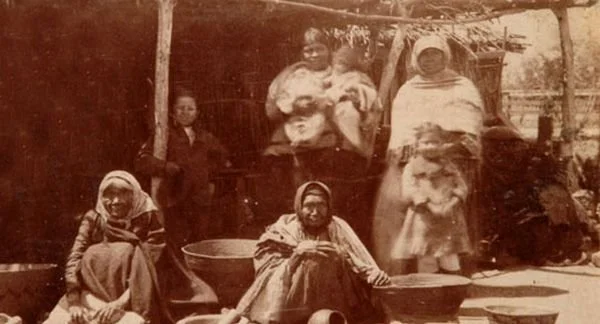
The Hahamog’na, a band of native Tongva people, settled alongside the Arroyo Seco from the confluence of the Los Angeles River through Elysian Valley, Highland Park, South Pasadena, and Glendale, to Pasadena and the foothills of Altadena. Photo: Pasadena Now
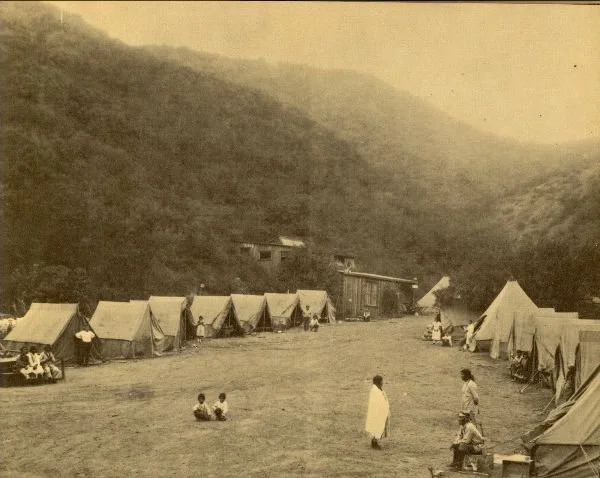
Temporary gna or gathering place of the Cahuenga Tongva people at the Hollywood entrance of the Caheunga Pass (date unknown). Gift to The Museum of the San Fernando Valley from Michel Stevens 2011.
All this changed in 1769 with the establishment of Mission San Diego and burgeoning of the mission system that would rule California life for more than 100 years. Spanish settlers and missionaries brought diseases that killed thousands of Indigenous people, as well as plants and animals that pushed out native species and ways of life. Many Tongva people were forced into slave labor on the missions. Toypurina, a native Tongva woman who led a 1785 revolt against the padres of Mission San Gabriel famously said at her trial: “I hate the padres and all of you. [F]or living here on my native soil, for trespassing upon the land of my forefathers and despoiling our tribal domains.”
Tongva land was stolen again and again in the coming years. Concessions, or land grants, were given to Spanish soldiers and these became known as ranchos, many of which still demarcate land parcels in the southland. When Mexico won its independence from Spain in 1821, it awarded many of these parcels to former soldiers and friends of the Mexican government. When California became part of the US at the end of the Mexican-American war in 1848, and the Gold Rush began, greed for land and gold led white settlers and miners, as well as state and federal authorities, to abandon land treaties with the Tongva people.
After losing their land, many Tongva became houseless or entrapped in what was essentially a legal slave market in downtown L.A. In 1850, California was admitted to the Union as a free state but also passed a law that legalized forced labor for Indigenous people. There were also state-sanctioned murders and massacres of Indigenous Californians. From 1834 to 1880, the Indigenous population in California plummeted from 150,000 to 18,000.
Today, there are semblances of hope. Four entities represent the Tongva people: the Gabrielino-Tongva tribe, the Gabrieleno/Tongva, the Kizh Nation and the Gabrieleño/Tongva Tribal Council. In 2008, the number of registered members of the Gabrieliño-Tongva tribe was 1,700. And while efforts to have the federal government recognize the Gabrieliño-Tongva are still ongoing, the state legislature passed a bill in 1994, formally recognizing the tribe. In 2020, a homeowner in Altadena ceded her one-acre property and home to the Tongva community, returning land to the Tongva for the first time. And though its last known speakers have died, Tongvan is being studied again in a classroom in Long Beach.
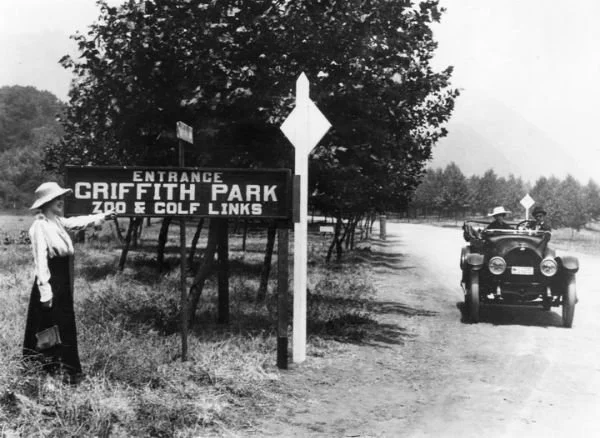
Griffith Park Zoo & Golf Links. Circa 1915 Photo: Golf Historical Society
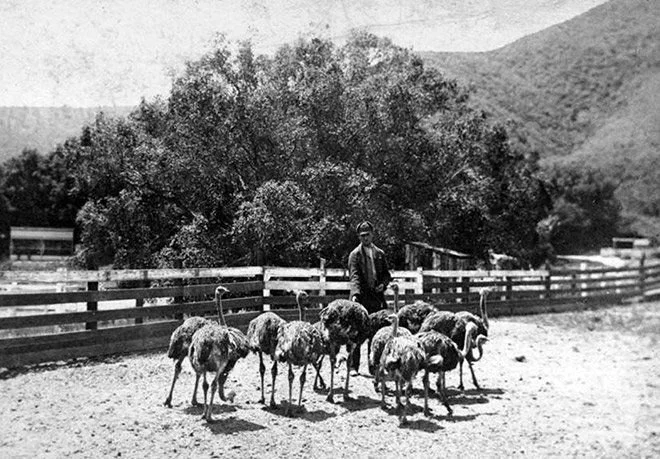
The Rancho Los Feliz ostrich farm, circa 1885. Courtesy of the Photo Collection, Los Angeles Public Library.
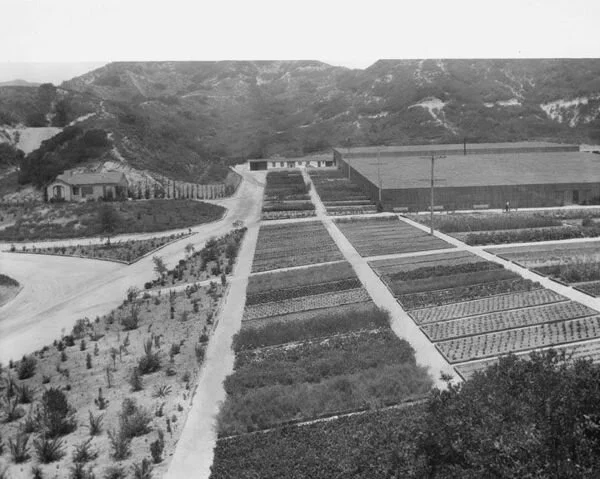
Little known Commonwealth Nursery, a 12 acre nursery of mostly native plantings producing 1 to 2 million plants per year for city parks and buildings. Opened in May 1928 and closed in the 1970s. Photo: Friends of Griffith Park
So what about Griffith Park? In 1781, Jose Vicente Feliz, a military corporal, had led a few soldiers and 44 settlers onto the land where Griffith Park now sits, and in 1796, Feliz was awarded a land grant. This group was christened the pobladores, the founders of Pueblo Los Angeles. The land transferred over time, of course, from Spain to Mexico, from Mexico to the U.S., and then in 1882, mining magnate Griffith J. Griffith acquired it.
In December 1896, Griffith and his wife donated 3,000 acres of land, a parcel bigger than Central Park, to the City of L.A. as a Christmas present. At the time, the land sat outside city limits. It was mostly rugged and undeveloped, though also home to one of L.A.’s earliest zoos and an ostrich farm. Griffith envisioned it as a multi-use space: city park, entertainment venue, golf course. Later, he donated money to build the Greek Theatre and observatory. Despite his colorful and often controversial life, Griffith held progressive views on the importance of parks. He believed they were not a luxury but a necessity for city folks, calling them a “safety valve for city life.” His deed to the land explicitly forbade the city from ever charging admission to the park, and it never has.
Delving into this history, LANLT aims to center and acknowledge the people who first lived on the land we call Griffith Park. We hold space for the suffering and oppression Indigenous tribes endured and honor the strides and struggles made by their descendants. It’s only in telling and retelling these complicated, contradictory and painful stories that we can understand our city and create a better and more inclusive L.A.
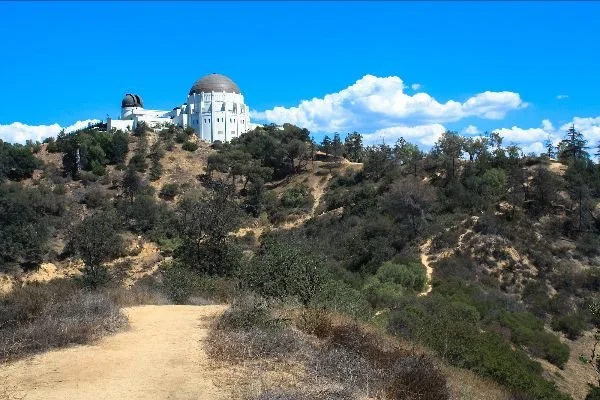
Griffith Park today. Photo: Zocalo Public Square