
LA Park History Series: From Toxic to Repurposed Green Space
Series written by Kate Martin Rowe
Brownfield: n.
a piece of land once used for industrial purposes that could be repurposed, expanded, or developed but is contaminated by hazardous substances. In the U.S., these sites often sit near, underneath, or adjacent to low-income communities of color.
Superfund: n.
the most extreme version of a brownfield and an EPA designation for thousands of sites where hazardous materials were “dumped, left in the open, or otherwise improperly managed” and now impact human, animal, and environmental well-being on the land.
Unfortunately, communities across Los Angeles are all too familiar with this bleak terminology.
What can you do with a piece of land that has been marinating in highly toxic chemicals for 75 years? What are people whose homes have sat on that land for decades to do when their bodies and those of their loved ones begin to break down with cancers, diabetes, autoimmune diseases, asthma, blood disorders, and more? When chickens die off unexpectedly or university researchers say that vegetables grown in their yards are not safe for human consumption?
These are the questions that assailed residents of Carson, who for decades had lived near the Del Amo and Montrose Superfund sites.* These adjacent tracts of land had formed a super-sized industrial wasteland for much of the twentieth century beginning with the manufacture of DDT by Montrose Chemical Corp in the 1940s that continued through the 1980s. During those years, Montrose dumped a chemical stew of waste into ponds, trenches, and a below-ground aquifer on its thirteen acres of property. Toxic waste was also left to fester in sewers and stormwater drains, eventually making its way to the Pacific Ocean. Right next door, on a 280-acre property, the U.S. government also built a synthetic rubber factory for use during World War II. The factory off-loaded its waste, including benzene, propane, butylene, and butane into unlined pits and evaporation ponds until it closed in 1972.
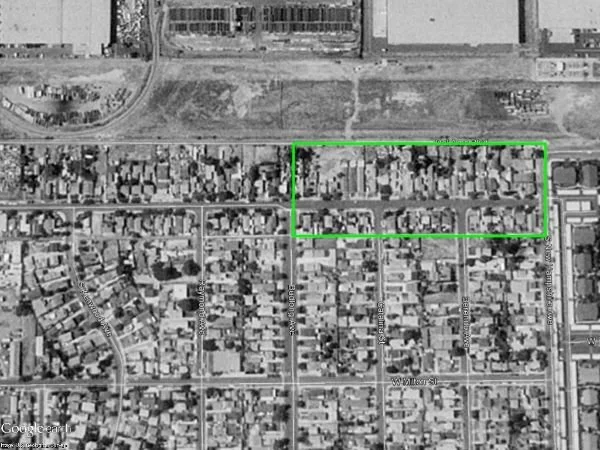
In 1994, the neighborhood just South of the toxic sites before 60 homes were removed.
Decades later, in 1994, residents in the neighborhood just south of the superfund sites began to take matters into their own hands, imploring upon the government to test for toxins they believed were causing illnesses of their children, pets and contaminating even the food they grew. They organized and banded together to form the Del Amo Action Committee (DAAC). By 2001 about 60 homes were demolished due to high levels of contaminants, displacing an entire community. In response, the committee demanded not only clean air, water, and soil, the residents also wished for a park and pressured the EPA to clean up the Superfund sites.
In the 1950s, the U.S. government had sold the rubber plant and property to Shell Oil. So, thanks to the committee’s efforts, the EPA ordered a cleanup and Shell footed the bill in 2015 to the tune of $55 million.
As cleanup efforts were underway, a number of environmental groups had tried to intervene and repurpose the land, but land ownership and liability concerns dogged their efforts. That’s when the LANLT stepped in. Because our status as a community-based land trust gives us the ability to own property, and our small size makes us nimble, we were able to buy the land from Shell in 2015 for $1.00.
We immediately began working with DAAC and other partners to design and build the park of their dreams. As always, making this park a reality has required many partnerships, time, money—almost $16 million to date—and loads of patience. But we are pleased to report that Wishing Tree Park is slated to open the summer of 2022 and will house 8.5 acres of futsal courts, a basketball court, a baseball field, as well as picnic areas and walking paths — all designed in collaboration with community members. When open, the park will be managed by L.A. County Department of Parks and Recreation.
Whether through non-profit, community, or government effort, it takes much coordination to transform a poisoned landscape into a safe and healthy green space. We are honored to be a part of these efforts and hope you can join us in celebrating a wish that came true.
Other parks built on Superfund sites and brownfields in Los Angeles includes Vista Hermosa Park, Maywood Riverfront Park and the Los Angeles State Historic Park.
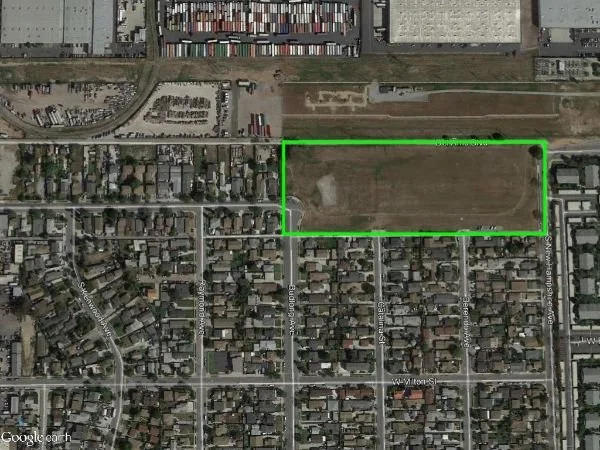
In 2015, the empty lot that remained.
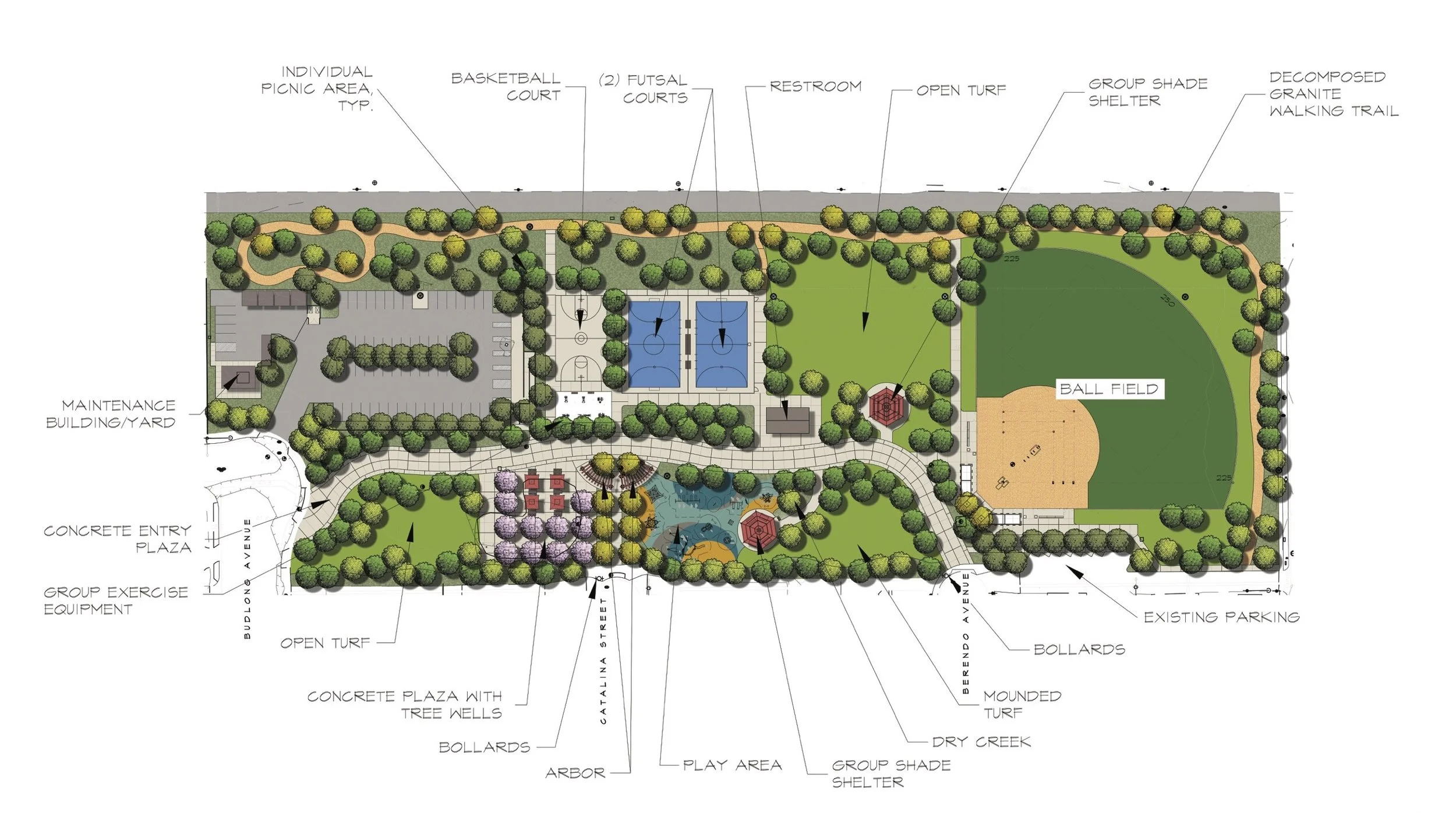
Plans for Wishing Tree Park